Roadcase MVP
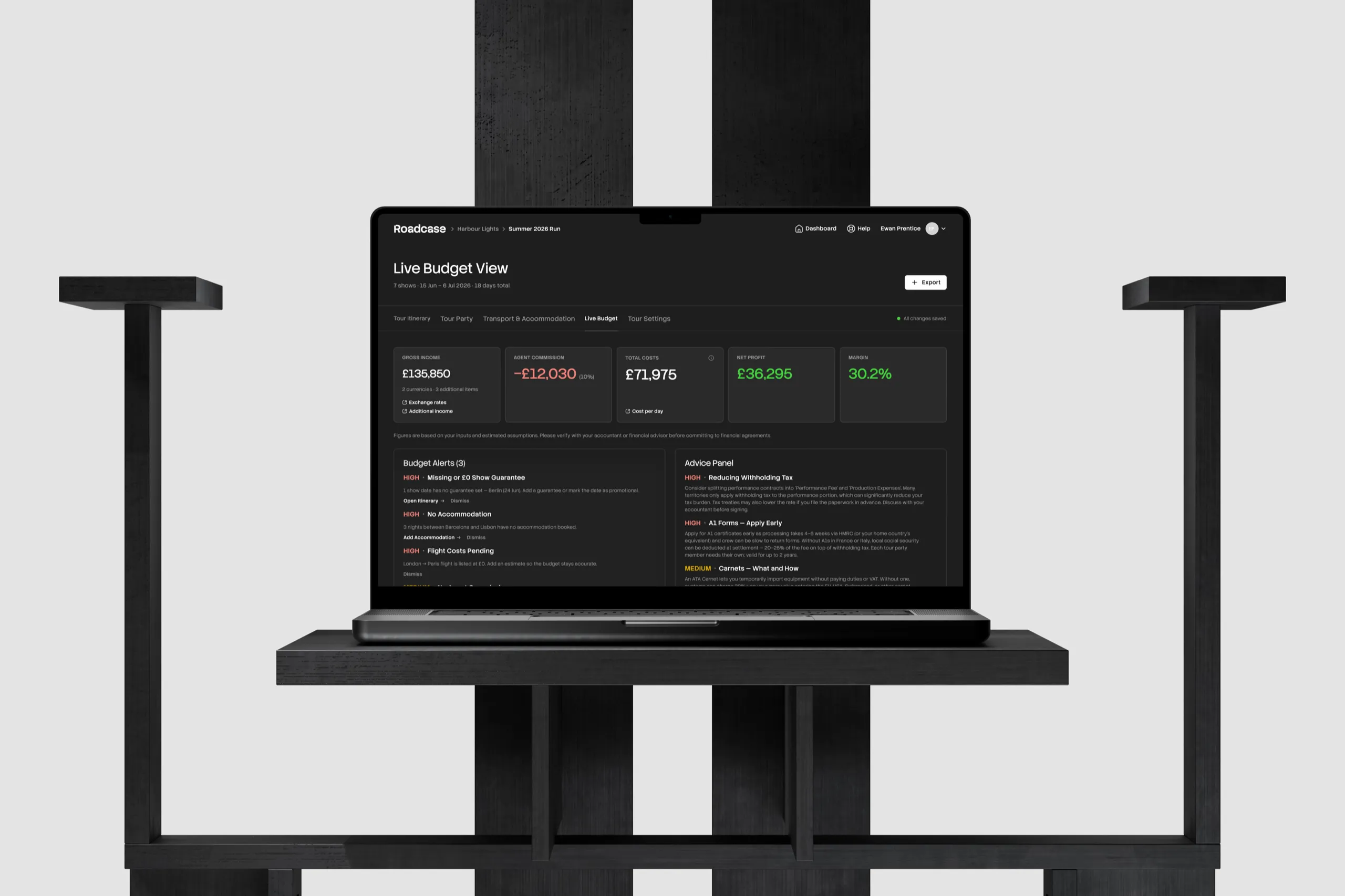
A tour budget that survives the routing changing.
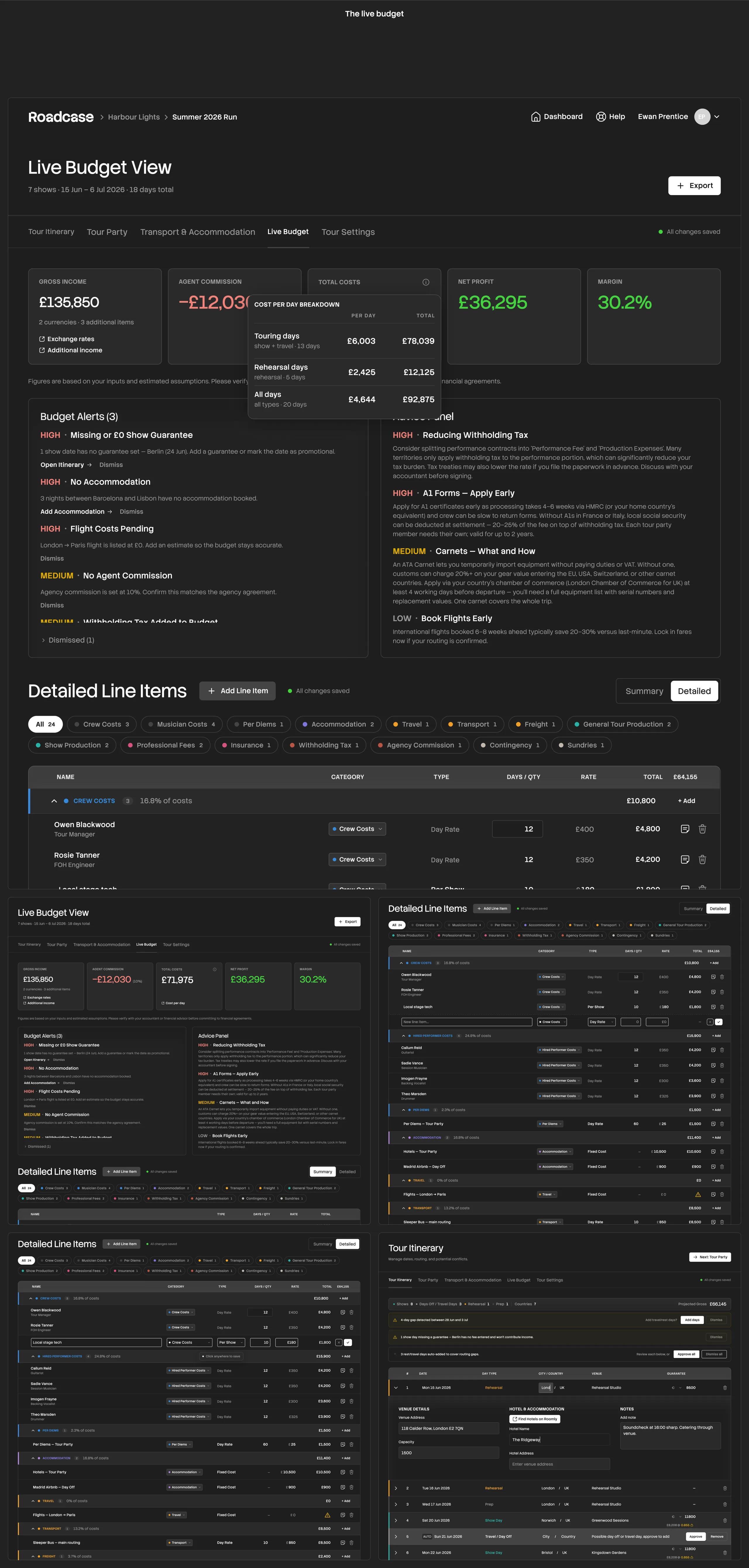
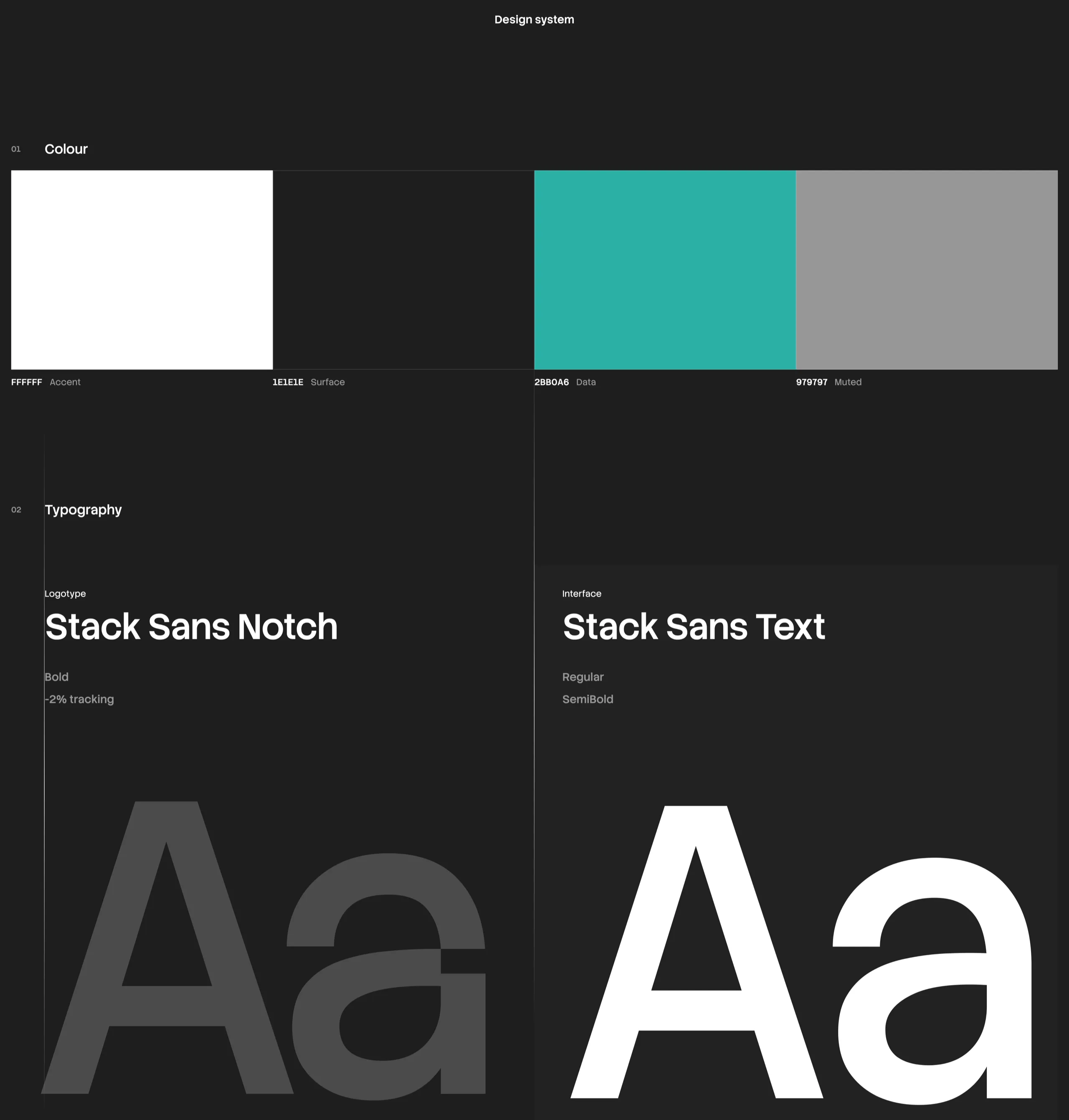
I led design on the Roadcase SaaS MVP: research, information architecture, the token set and component library, and every screen of the tour budgeting software. Specs went to engineering as Dev Mode annotations rather than a separate document.
Spreadsheets can’t follow the routing.
Tour managers build budgets in spreadsheets that go stale the day they are shared. A cancelled date, a currency swing or a fifth crew member ripples through per diems, withholding tax and freight, and nobody finds out until settlement.
One live budget, connected end to end.
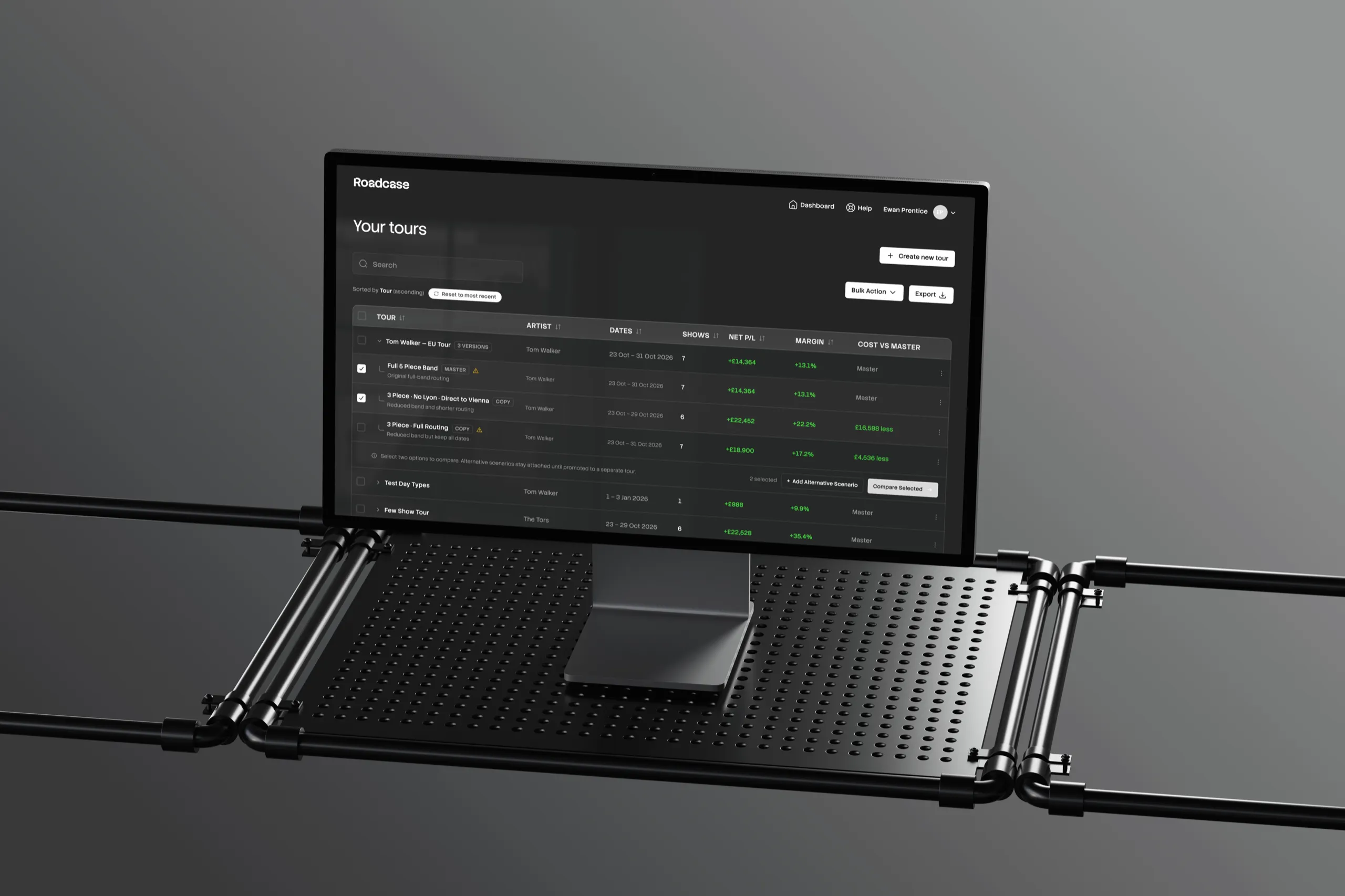
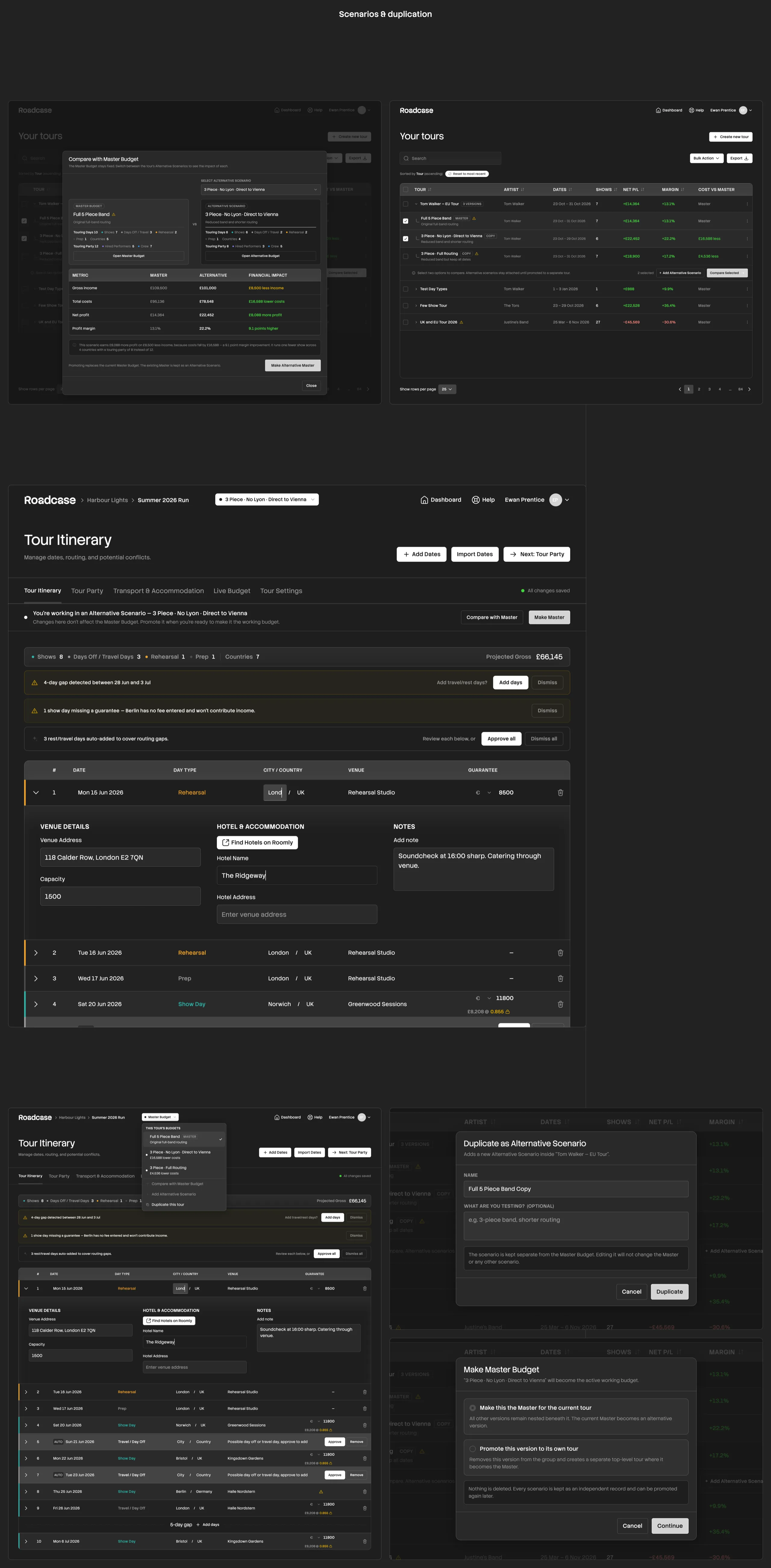
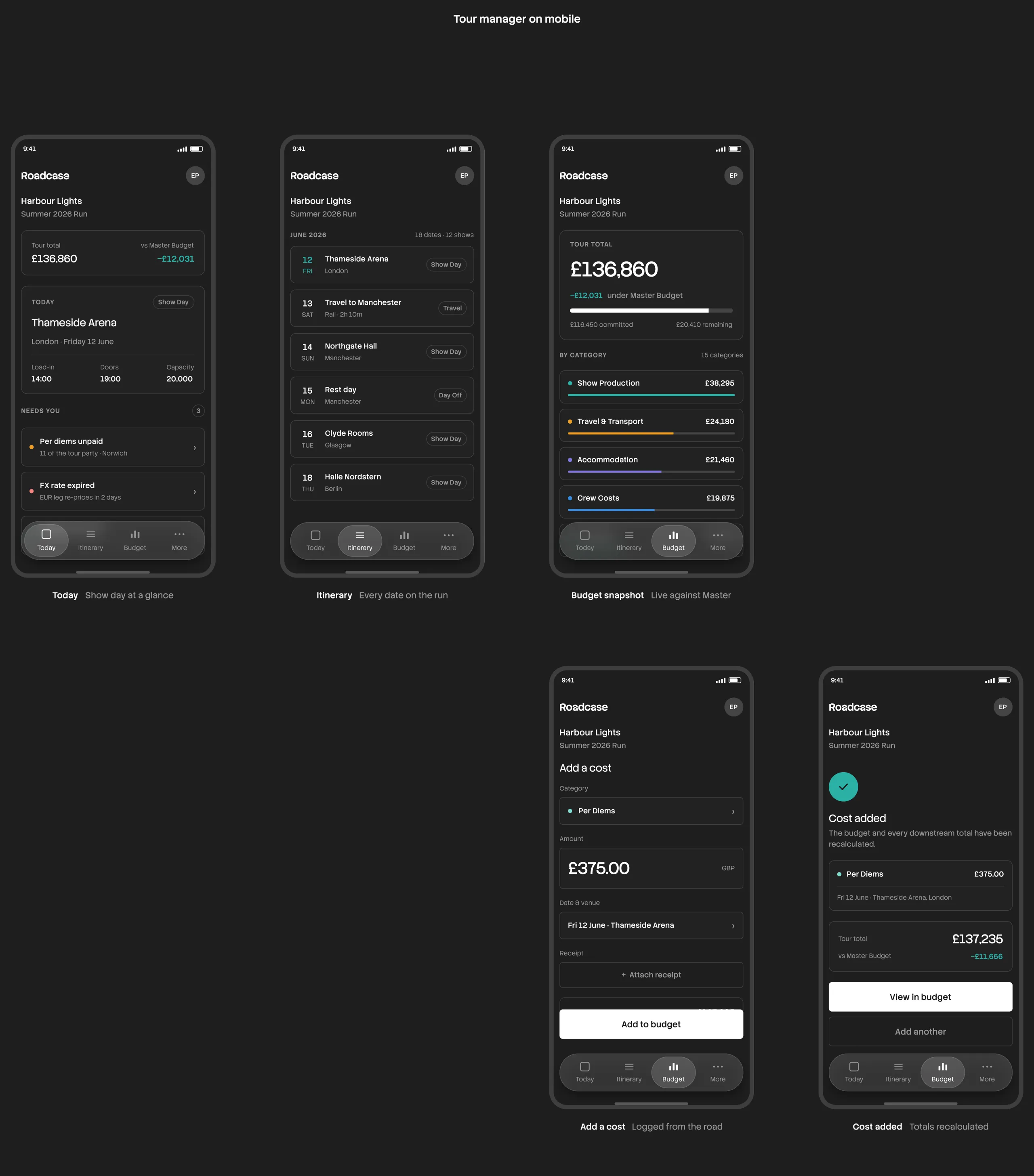
One live document instead of a spreadsheet. Dates, people and cost lines are connected, so a change anywhere updates the total everywhere. Alternative scenarios let a manager test a routing change without destroying the budget already agreed.
Design process
-
01
Discovery
Tour manager interviews Settlement walkthroughsHistorical tour budgets Competitor teardown -
02
Structure
Tour and budget data model Navigation modelScenario state machine Content inventory -
03
Design
Colour and type tokens Component libraryBudget and itinerary screens Scenario comparison screens -
04
Handoff
Dev Mode annotations Component specsBuild reviews Design QA -
05
Measure
Budget accuracy at settlement Time to first budgetSupport ticket volume Adoption by role

Roadcase MVP
A tour budget that survives the routing changing.
I led design on the Roadcase SaaS MVP: research, information architecture, the token set and component library, and every screen of the tour budgeting software. Specs went to engineering as Dev Mode annotations rather than a separate document.
Spreadsheets can’t follow the routing.
Tour managers build budgets in spreadsheets that go stale the day they are shared. A cancelled date, a currency swing or a fifth crew member ripples through per diems, withholding tax and freight, and nobody finds out until settlement.
One live budget, connected end to end.
One live document instead of a spreadsheet. Dates, people and cost lines are connected, so a change anywhere updates the total everywhere. Alternative scenarios let a manager test a routing change without destroying the budget already agreed.
Design process
-
01
Discovery
- Tour manager interviews
- Settlement walkthroughs
- Historical tour budgets
- Competitor teardown
-
02
Structure
- Tour and budget data model
- Navigation model
- Scenario state machine
- Content inventory
-
03
Design
- Colour and type tokens
- Component library
- Budget and itinerary screens
- Scenario comparison screens
-
04
Handoff
- Dev Mode annotations
- Component specs
- Build reviews
- Design QA
-
05
Measure
- Budget accuracy at settlement
- Time to first budget
- Support ticket volume
- Adoption by role